Showing posts with label Celtic. Show all posts

10.13.2011

Celtarabia, Ancient Forces (Osmosys Records, 1997)


Celtarabia are an English duo from the nineties (they've recently begun playing together again), consisting of Quentin Budworth (hurry-gurdy, cittern) and Amanda Lowe (dulcimer, vocals). As their name somewhat implies, they mixed traditional Celtic music with Medieval tunes from the European and Arab worlds. Accompanied by dideridoo, sax, fiddle, and an assortment of drums and percussion instruments from around the world, the duo specialized in extended, rhythm-heavy, trancelike jams. While they used all-acoustic instruments, their influence on techno-world music fusion bands like The Afro-Celt Sound System is obvious, as is their influence on more esteemed Celtic/world bands like Kíla. Their 1997 sophomore CD Ancient Forces combines instrumentals with songs, crossing centuries and continents. The instrumentals hold up very nicely nearly fifteen years later; unfortunately, the same cannot be said of the songs.

Ancient Forces
is very much a tale of two albums. On one hand, the instrumental arrangements are generally of excellent quality. The didgeridoo may seem out of place at first, but the combination of its drone with some rudimentary percussion gives many of the tunes on the album a surge of primal energy. The mellower instrumentals wouldn't sound out of place on a Loreena McKennitt CD, but if you pick up a copy of Ancient Forces it will be for the extended jams. Several of the tunes run over five minutes in length, and the best tune, "Eight Step Trance," exceeds eleven minutes. At their best, the heavy percussion, the bellowing didgeridoo, and the melodies played with steadily increasing urgency on the hurdy-gurdy and dulcimer mix together like ingredients in a potent spell.

Regrettably, the songs are as bad as the instrumentals are good. I respect Amanda Lowe for her dulcimer playing and her contribution to Celtarabia's musical vision, but as a singer she just doesn't cut it. Her range is limited, and her delivery is forced at best. The original lyrics are trite statements of the band's purpose ("come alive with the ancient forces," or "succumb to the trance"). The traditional songs just expose Lowe's limitations as a singer; I've heard many other versions of "She Moved Through the Fair," for example, and they're all better than the one recorded here.

While Ancient Forces has several worthy tracks and was important and influential on some levels, it's also maddeningly uneven. Celtarabia give equal time to their strengths and weaknesses, and the album suffers significantly as a result.

Overall grade: C+

reviewed by Scott


8.06.2011

Kevin Burke and Cal Scott, Suite (Loftus Music, 2010)


Kevin Burke is a legendary Irish fiddler, having been part of The Bothy Band, Patrick Street, and the Celtic Fiddle Festival in addition to a successful solo performer in a 40-year career. Guitarist Cal Scott has a bit more of an eclectic background; he performs with folk bands, records jazz albums, and composes and arranges music for cartoons and commercials. The two current Oregon residents first pooled their talents in 2007 with their CD Across the Black River. Now they return with a new CD called Suite, in which they perform traditional and self-composed Irish fiddle tunes with a bit of a classical twist.

Suite opens conventionally enough, with a set of jigs, a set of reels, and then a waltz. The most interesting section of the album, though, is the four-part "Irish Session Suite," for which Burke leads a string quartet through sets of Irish traditional tunes arranged in a classical style by Scott. It's actually a very unusual take on Irish music, but it's the kind of novelty that works well here in the hands of very capable musicians. The remaining two tracks are sets of hornpipes, the first of which is laid back and the second of which is more punchy.

On Suite, Kevin Burke and Cal Scott take a unique approach to performing and arranging Irish fiddle standards, with pleasing results. Combining two distinct musical styles, whose compatibility is not inherently obvious, is a lot harder than Burke and Scott make it sound.

Overall grade: B+

reviewed by Scott

"Stella's Waltz"

7.20.2011

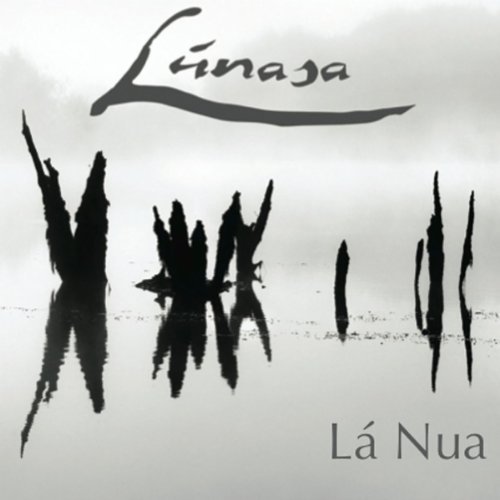
Lúnasa, Lá Nua (Lúnasa Records, 2010)


Lúnasa were one of my favorite Irish bands of the late 90s and early 00s. They have kept a relatively low profile recently, but in 2010 they released their first studio album in four years and seventh overall, called Lá Nua (New Day). Like their previous work, Lá Nua contains a number of decent sets of tunes and a couple of very good ones.

The core of Lúnasa remains intact for the new album. Séan Smyth (fiddle and whistles), Kevin Crawford (flutes and whistles), Trevor Hutchinson (upright bass, still best known in rock circles for his work with The Waterboys) and Cillian Vallely (pipes and whistles) have now been playing together for well over a decade. The newest member is guitarist Paul Meehan, who replaced Donogh Hennessy. The basic sound of Lúnasa hasn't really changed over the years. They play a standard mixture of traditional and self-composed jigs, reels, airs, waltzes and hornpipes. The primary twist in their music comes from Hutchinson's jazz-infuenced bass lines. Admittedly, the formula can sometimes come across as redundant. Like the other good Irish bands, however, Lúnasa make it work with strong musicianship and chemistry, along with the ability to occasionally put a particularly good arrangement to a particularly good tune. Examples of this on Lá Nua include a really nice traditional waltz called "Ridées Six Temps" at the end of a set called "Tro Breizh." "Unapproved Road" is a fine set of reels on the subtler side, and "The Shore House" is a good lively set to close the album.

I've had a tendency to go through stretches where I listen to a lot of Irish music over a couple of months, and then put it away for a while. So sometimes a standard set of jigs and reels can leave me with a "been there, done that" feel, and other times the same recording can hit me like a breath of fresh air. I think my overall impression of Lá Nua benefits from the fact that I hadn't touched base with Lúnasa in a while. But I had good reasons to like them in the first place, and if you're looking for an Irish fix this album will do nicely.

Overall grade: B+


reviewed by Scott

"The Raven's Rock"

12.31.2010

Loreena McKennitt, The Wind That Shakes the Barley (Quinlan Road, 2010)


Like a lot of performers who have become sufficiently well established that they no longer need to prove anything to anyone, Loreena McKennitt has started to take her time putting out new music. Her 2006 album An Ancient Muse came out nine years after its predecessor, The Book of Secrets. Four years after An Ancient Muse, McKennitt has decided to throw her patient fans a bit of a carrot in the form of a mostly traditional album called The Wind That Shakes the Barley. McKennitt's sources of inspiration have become increasingly global over the years, but her sound has always been Celtic at its heart. The Wind That Shakes the Barley is a collection of some of the Irish songs that first led McKennitt into making a life out of music, and the songs are interpreted with the reverence and the quality that anybody familiar with her music would expect.

The Wind That Shakes the Barley does not unearth any rare treasures; instead, McKennitt focuses on songs that will be familiar to anybody with a sizable collection of Irish music. McKennitt has a bit of fun with the first two songs on the album, both of which generally go by the title "As I Roved Out." (The second song, which has been sung by Andy Irvine with Planxty among many other people, is here titled "On a Bright May Morning.") "Down by the Sally Gardens" is certainly an Irish folk standard, and McKennitt gives it a particularly nice rendition here. "The Star of the County Down" will appeal to anybody who knows a "fair colleen." My favorite piece is "Brian Boru's March," the first of two instrumentals, which is played here as a Medieval jig. It's the most exotic-sounding track on the album, though. Otherwise, McKennitt sticks to a basic combination of Celtic and New Age, leaning more on the Celtic side of things. She established her musical career initially by adopting this approach, and here she makes it look easy.

Indeed, the best and worst thing you can say about The Wind That Shakes the Barley is that it sounds so natural that it comes across as almost being effortless. Loreena McKennitt's mastery of Celtic music remains beyond reproach, and there's nothing on this CD that her fans won't like, but she's shown more ambition elsewhere.

Overall grade: B+


reviewed by Scott

a nice photo montage that somebody on YouTube set to "Brian Boru's March"

11.09.2010

Kíla, Soisín (Kíla Records, 2010)


Kíla have been my favorite active traditional Irish band for well over a decade at this point.  Their style has generally been very energetic and percussive, but they've made a point of trying to do things a little differently with each record.  While working on their 2003 CD Luna Park, an album dominated by long extended jams, they formulated a long term plan to make a dance album next, followed by an album of slower, contemplative instrumentals.  Gambler's Ballet, the dance record that came out in 2007, didn't come across as much of a departure for the band, but their new album Soisín really sounds like nothing the band have done before.  Inspired by the writings of Máire Soshin O'Halloran, an Irish woman who went to Japan to join a Zen Buddhist monastery, Soisín finds Kíla at their most subdued and subtle.

On some level, you could probably regard Soisín as a side project involving most of the members of Kíla.  Regular members Lance and Brian Hogan barely contribute, replaced by Eoin O'Brien on guitar and Martin Brundsen on bass.  Rónán Ó Snodaigh, whose stream of consciousness Gaelic singing/chanting has arguably been the defining element of Kíla's sound, only contributes some light percussion on this album.  The tone for Soisín is set immediately with the first tune "The Kissing Gate," whose melody is hummed by the band's fiddler Dee Armstrong.  I don't recall Armstrong ever contributing vocals on any previous Kíla albums, so the presence of a prominent female vocal on track 1 of Soisín really represents a radical departure. 

The rest of Soisín is, as advertised, quiet and contemplative. This may throw some long-time Kíla fans for a loop, but on its own terms the album works rather well.  There is some really nice acoustic guitar work, done by both Rossa and Colm Ó Snodaigh.  (Rossa plays his usual vast assortment of instruments, while Colm branches out quite a bit from his usual role as flute and sax player.)  Highlights for me were Armstrong's "The Bearna Waltz," uillean piper Eoin Dillon's "1st Ave.," and the title tune, composed by Colm.

Fans of the mellower side of Irish music will probably like Soisín.  People who've come to expect a frenzied, groove-oriented sound from Kíla will need to leave their expectations at the door, but I think they'll be satisfied by the results as well.

Overall grade: B+


reviewed by Scott

Kíla premiered the new album in an Irish church.

8.15.2010

The Chieftains featuring Ry Cooder, San Patricio (Hear Music 2010)


Over a career spanning nearly half a century, The Chieftains have established themselves as Ireland's most internationally revered folk music group. They have used their status to sort of appoint themselves cultural ambassadors, collaborating with musicians from around the world and across many genres on their recordings. In some ways, guitarist/producer Ry Cooder's career has followed a similar pattern. Best known as the producer and co-ordinator behind Buena Vista Social Club, a celebration of the folk music of Cuba, Cooder likewise enjoys sharing the spotlight with different musicians from different cultures. Cooder's previous album Chavez Ravine touted the music of the Mexican community in Los Angeles, and his interest in Mexican music led to his current collaboration with The Chieftains, called San Patricio. The album was inspired by the story of Irish immigrant soldiers in the Mexican-American War who came to sympathize with the plight of the Mexicans struggling against the American invaders. They changed sides, for both religious and moral reasons, but were defeated along with their Mexican allies; those who survived the battles were captured and hanged as deserters.

The music on San Patricio focuses on the kind of traditional pieces that would have been familiar to the San Patricios as mid 19th century Irish immigrants, and to the Mexicans whom they aided in vain. People familiar with Chieftains albums will recognize the pattern, as Paddy Maloney (whistles and pipes), Sean Keane (fiddle), Kevin Conneff (bodhrán), Matt Molloy (flute), and Tríona Marshall (harp) accompany a small army of guest performers. Most of these guests are Mexican, although Linda Rondstat sings a song in Spanish, Ry Cooder performs an original composition, and Moya Brennan sings a song from the Irish perspective. Galician piper Carlos Núñez, a frequently recurring guest on Chieftains recordings (Galicia is a Celtic region in Spain), also makes a few appearances as well. The best cameo, though, comes from actor Liam Neeson, who recites Brendan Graham's poem "March to Battle (Across the Rio Grande)" about the ill-fated San Patricios.

It takes a rare courage to choose to be on the losing side of history, but that's essentially what the San Patricios did. Yet their cause still resonates today. Neither The Chieftains, nor Ry Cooder, nor anybody else who worked on San Patricio needs to be reminded of the conflicts which Mexicans and people of Mexican descent face in America right now, especially in the territories that were taken from Mexico without any sort of justification. So the political statement here is obvious, and greatly appreciated at least by me. As far as the music goes, it's a lot like many other Chieftains recordings -- perhaps too much so to really distinguish itself. Fans of The Chieftains will know exactly what to expect, and while this guarantees a certain level of quality, there's a lot of predictability here as well.

Overall grade: B


reviewed by Scott


Behind the scenes of the making of San Patricio.

6.09.2010

Hughes de Courson, Babel (Virgin Classics, 2008)


Mozart is blended with Egyptian music, Bach is set to African percussion, and Vivaldi compositions are played like Irish reels. Operatic sopranos sing to the beat of dumbeks, Bulgarian choirs sing flamenco, and children sing and rap folk songs from around the world. Songs are sung in French, Spanish, Bulgarian, Arabic, Medieval Italian, and even a made-up language. Welcome to Babel.

He's not known in this country, but Hughes de Courson has been a part of the folk and classical music communities in France for over thirty-five years. He originally came to prominence as a member of the medieval rock group Malicorne, playing a variety of instruments both familiar and unfamiliar. (Anybody out there know somebody who plays the crumhorn?) More recently he has spent his time primarily as a producer and arranger; his most noteworthy credit from my perspective is the 2000 CD Ilmatar by the Finnish folk group Värttinä. His musical interests are as eclectic as anybody's, but he also has an artistic ambition to match it. Babel is actually a compilation album, gathering material from nine different albums de Courson put together between 1993 and 2008.

If there's a flaw with Babel, it's that it suffers from what Lewis Carroll would call "muchness." The album covers an astounding amount of musical ground in a bulky 136-minute, 2 CD package. To say that listening though it completely requires a serious attention span would be an understatement. Still, there are at least one or two things to suit every musical taste -- how could there not be -- and there are a few highlights to justify the expense of your time. I'm particularly fond of the Balkan flamenco of "Romero Santo" on disc one and the combination of Bulgarian female voices with an angelic child singer and a classical waltz on "Tana Shàot Leïn" on disc 2.

It's been said that music is the universal language. Hughes de Courson certainly believes that, and Babel is a massive testament to de Courson putting his belief into practice. It's a hell of a lot to digest, but I think anybody who tries will find their efforts rewarded.

Overall grade: B+

reviewed by Scott


"Toma que Toma"

3.01.2010

String Sisters, Live (Compass Redords, 2009)


String Sisters are a folk supergroup of sorts, originally established as part of a program at the 1998 Celtic Connections festival in Glasgow. The group consists of six women prominent in the Celtic and Nordic fiddling traditions. Founder Catriona MacDonald comes from the Shetland Islands, Mairéad Ní Mhaonaigh of the band Altan is from Ireland, Annbjørg Lien represents Norway, Emma Härdelin of the groups Garmarna and Triakel represents Sweden, and Liz Knowles and Liz Carroll represent the Irish fiddling tradition in America. The "sisters" became more active as a group in the second half of the last decade, and their album Live is taken from a concert they performed together in Norway in 2005 with the help of four accompanists. I consider myself a fan of four of the six people involved, so picking this CD up was a no-brainer for me.

Unfortunately, the idea looked a lot better on paper than it sounds in practice. With this many fiddlers, the jigs and reels lose their tightness. Furthermore, at times it sounds like the tunes were selected because they were easy enough for all six fiddlers to pick up quickly, not because they showcase the individual performers at their best. Ní Maonaogh and Härdelin flavor the proceedings with songs, and Lien does a solo on the hardanger fiddle, but otherwise the opportunities for any of the performers to shine are limited, and nothing on Live sticks out as being particularly memorable. Some duets or trios might have allowed the fiddlers to engage in more direct collaboration and interplay, but none of that was forthcoming, either.

A good Irish barroom session involves plenty of spontaneity. Live could really have used some of that. String Sisters have a lot of collective talent, but in this case the whole is much less than the sum of the collective parts. Perhaps this worked better in person, but on disc the performance just sounds watered down to me. The group has been touring more lately, and I hope they're gelling a lot better now than they did when this concert was recorded.

Overall grade: C

reviewed by Scott

"Rumble thy Bellyful"

12.31.2009

Eric Bogle, The Dreamer (Greentrax, 2009)


Although largely unknown to mainstream music audiences, Eric Bogle is a legendary figure in Celtic folk circles. The 65-year-old Scottish native who immigrated to Australia has amassed a large assortment of memorable songs over his long career. Some are funny, but his most famous songs are sharply poignant. Bogle has a particular skill in writing songs about war and the toll it exacts on the participants. Nobody forgets the first time they hear "And The Band Played Waltzing Matilda," a much-covered song about an Australian soldier wounded at Gallipoli. "No Man's Land," alternatively titled "The Green Fields of France," similarly pays tribute to the Scottish soldiers of the First World War, while questioning whether the enormous sacrifice imposed on the soldiers lying in the vast French graveyards accomplished anything constructive.

Bogle has plenty of things to say about a variety of topics, though, and on his new album The Dreamer he gets to many of them. Bogle addresses American casualties in Iraq on "Bringing Buddy Home," his daughter growing up on "Flying Away," environmental pollution on "Someone Else's Problem," and last year's severe drought in "An Australian Prayer for Rain." A few songs stick out for me, though. The first is "Nothing Worth Saving," a tribute to a friend of his (and to committed activists in general) who are willing to make the extra sacrifice to preserve something they believe in. "For nothing worth saving comes easy or free, Nothing worth fighting for comes with a guarantee, that you’re going to win my friend, without sacrifice; for if something’s worth saving, there’s always a price." "Snowdrop," written and sung by longtime friend and bandmate John Munro, talks about the plight of homelessness in Russia, where bodies have a disturbing way of emerging from underneath the snow in the spring melt-off. Bogle gets autobiographical in the title song; he's been criticized for being a dreamer, but much like John Lennon in the song "Imagine," he wears the label as a badge of honor. "Yet I dream of a world without hunger, I dream of a world without war; Where we live at peace on this earth together, where the air tastes sweet, the rivers all run clear. Dream it first and it will happen, but if you don’t believe that it can, just leave me to my dreaming, because I’m happy where I am." "Lost Soul" tells the story of an Ngarrindjeri Aboriginal warrior who died fighting for Australia in the First World War, whose gravesite was discovered in Belgium by Australian students in 2006. Sand from his native area, the Coorong, was sprinkled on his grave, and dirt from his grave was brought to the Coorong to return his spirit home. On the closing song "The Last Note," Bogle talks about of the spirit of the music stays with him long after the performance is done. The song's significance was magnified by Bogle's announcement that his 2009 tour would be his last.

As usual with Eric Bogle's albums, the songs on The Dreamer tend to be weighty but emotional. I suppose I could be critical of this album lacking the usual amount of levity with which Bogle balances things out on his recordings. Still, listening to any new Eric Bogle album is like re-connecting with an old friend who's seen and done a lot in his time, and who understands the workings of the world and humanity better than most people do. People who like good storytelling songs will like anything that Eric Bogle puts out, and The Dreamer is no exception.

Overall grade: B+

reviewed by Scott

Eric Bogle and John Munro perform the title song on Bogle's Farewell Tour of the UK.


Reprinted with permission from The Green Man Review
Copyright 2010 The Green Man Review

11.05.2009

Liz Carroll and John Doyle, Double Play (Compass Records, 2009)


Chicago resident Liz Carroll first gained attention in Irish music circles as a teenager in the 1970's, when she won a pair of fiddling competitions in Ireland. She recorded and performed sporadically between the late seventies and 2000, but has since picked up the pace considerably. John Doyle's guitar playing for the band Solas in the late nineties was nothing less than a revelation; his energetic, percussive accompaniment completely redefined the style and has spawned many imitators. Carroll and Doyle have toured together frequently over the past decade, and Double Play is their second album as a duo.

Carroll and Doyle make a really good team because they can play with the subtlety and intimacy you would expect from a duo, but they can also match the energy and fury of the best five or six-piece Irish bands. Double Play contains plenty of examples of both mellow and high-octane Irish fiddle tunes, many of which were composed by either Carroll or Doyle. Doyle also sings three songs for the album. The pair have set a high standard of quality in their performances both separately and together over the years, and they don't disappoint here. My favorites are the set beginning with "Lament for Tommy Makem," in which Doyle plays some really nice harmony under Carroll's melody, and the set beginning with "Paddy Glackin's Trip to Dingle." Perhaps I'm biased because Dingle Bay was one of the highlights of my honeymoon, but that set really swings.

If you're a fan of Irish music, or a least curious about the genre, you'll definitely like Double Play. Liz Carroll and John Doyle are both superb players whose abilities are well showcased by this recording. Like with a lot of recordings by top-notch folk musicians, though, it doesn't quite match what the performers can do live, so definitely see them in concert as well if you get the chance.

Overall grade: A-

reviewed by Scott

Liz Carroll and John Doyle were the featured entertainment at The Capitol on St. Patrick's Day. The musicians come out of this looking good. Draw your own conclusions about everybody else.

1.08.2009

Enya, And Winter Came... (Reprise, 2008)


While her siblings and uncles in Clannad may have created the Celtic/New Age hybrid genre, it was Enya who brought the style to its commercial and artistic peaks. Enya's 1987 self-titled debut defined all the core elements of her sound, including multiple tracks of synthesizers and vocals, and really sounded like nothing else at the time. Her commercial breakthrough came the following year with her sophomore effort Watermark and the massive hit single "Orinoco Flow." More albums have followed, repeating both the same musical formula and the commercial results. While Enya has the reputation of being something of a recluse -- she's never toured, for one thing -- she continues to release albums regularly. Her most recent effort, And Winter Came..., came out in November and features music related to Christmas and the season of winter.

The best and worst thing you can say about any Enya recording is that if you're already familiar with her music, then you know exactly what to expect. And Winter Came... is no exception to the general pattern. Nicky Ryan has produced all of Enya's music, and his wife Roma Ryan continues to write the lyrics to Enya's musical compositions as she's done for over twenty years. Enya herself remains the same one-woman orchestra and choir she's always been, doing all the vocals and nearly all of the instrumentation. On one hand, there's no denying that the formula has worked well for her. Her ambient musical textures retain the same hypnotic charm they've always had. But at the same time, it's very hard to distinguish most of the songs on a particular Enya CD with most of the songs on any of her other recordings.

Invariably, though, one or two songs on each album stick out. On And Winter Came..., the two standout songs are "Trains and Winter Rains" (the leadoff single) and "My! My! Time Flies!" The latter song features the album's one guest performer, guitarist Pat Farrell, and has an uncharacteristically lively tempo with quirky lyrics making reference to people as diverse as Isaac Newton and The Beatles. It's a rare example of Enya letting her guard down a bit and audibly having fun with a particular song, and she should do songs like it more often.

And Winter Came... will undoubtedly appeal to people who are fans of Enya's earlier work. It also gives enough reasons for people who might have gotten bored with her sound to tune back in.

Overall grade: B+


reviewed by Scott


"Trains and Winter Rains"


Reprinted with permission from The Green Man Review
Copyright 2009 The Green Man Review

8.18.2008

Ronnie Drew, 1934-2008


Irish music lost one of its most venerable elder statesmen this past weekend when Ronnie Drew passed away at the age of 73. Drew was a founding member of The Dubliners, who together with The Clancy Brothers re-vitalized interest in the traditional songs of Ireland in the early to mid sixties. Songs like "The Wild Rover," "Whiskey in the Jar," and "Finnegan's Wake" have become Irish standards largely because of The Dubliners.

Drew certainly didn't have the purest singing voice in the group; that belonged to the late, great Luke Kelly. Instead, Drew had a very distinctively deep and rickety voice that, as he put it, was "more of a storytelling voice" than a singing voice. Indeed his voice is something of an acquired taste, but it had more than enough character, combined with Drew's strong personality, to make him an effective vocalist regardless.

In their songs, Drew and the Dubliners told many stories of Ireland in general and their home city in particular. They also wore their strongly left-leaning politics on their sleeves. Their defiant attitudes and lifestyles, combined with their staunch refusal to compromise and insistence on calling things exactly as they saw them, made The Dubliners heroes to Irish bands from subsequent generations like U2 and The Pogues.

Drew first left The Dubliners in 1974. He returned in 1979 and stayed with them another sixteen years, before leaving the band for good in 1995. He continued to draw crowds as a solo artist, and I was fortunate enough to get the opportunity to review the opening night of a multi-week run of shows at the Irish Arts Center in New York City in 2004. He seemed full of vigor and vitality at the time, but sadly his health started failing shortly afterwards.

"Finnegan's Wake"


In 1987, The Dubliners and The Pogues teamed up for a rousing version of "The Irish Rover." Drew and Shane MacGowan share the vocals.

6.26.2008

Moving Cloud, "Welcome: Who Are You?"; Shooglenifty, Troots; Martin Hayes and Dennis Cahill, Welcome Here Again


Bands that play traditional Celtic music generally operate under a basic formula, mimicking what goes on in typical pub sessions. The melodies are played on fiddle, plus one or two additional lead instruments like a flute or an accordion, while the aggressive strumming of a guitar and/or a bouzouki provides the chordal accompaniment. This approach has generally worked well over the past thirty-five years or so. Still, bands or duos interested in recording albums or going on tour know that they have to distinguish themselves in order to get noticed. Sometimes this can mean adding instruments on, whether it's something simple like natural percussion from instruments like the bodhrán, or something more complex like electronics or rock amplification. It can also mean stripping things down, focusing on the clarity of the melody instead of maximizing the energy. I've had the opportunity to listen to new albums from several Celtic acts over the past few weeks, with each act bringing something different to the table.

The first album I listened to is called "Welcome: Who Are You?", from a band called Moving Cloud. Despite the unmistakably Irish flavor of their music, Moving Cloud actually hail from the unlikely country of Denmark. (Some of you might recall a Donegal-based band with the same name that released two albums on Green Linnet in the nineties. The members of the two bands were evidently so fond of the same particular reel that they both named themselves after it. While I imagine they'd appeal to the same audience, they are two different bands, from different places, with different personnel.) The primary distinguishing element of Moving Cloud's sound is the heavy reliance on percussion. Svend Kjeldsen has been banging on the bodhrán and other assorted instruments for the band since their inception, and is the only person to be part of every Moving Cloud lineup to date. He provides a steady backbeat and groove to most of the pieces on the album. He is assisted on a couple of tracks by step dancer Mette Løvschal, a relative newcomer to the group. They collaborate on a unique recitation called "Anahorish... My Place of Clear Water," the most intriguing track on the album. Filling out the band's sound are long-time members John Pilkington (vocals, guitar, bouzouki) and Klavs Vester (flutes and whistles), along with the band's newest member, fiddler Christopher Davis Maack.

Outside of "Anahorish," "Welcome: Who Are You?" contains the usual series of jigs, reels, and slow airs, with Pilkington throwing in a few songs for good measure. Moving Cloud deserve to get noticed in the crowd, though, partly because Kjeldsen makes the faster pieces more rhythmic, but also because the band as a whole plays with a healthy amount of energy and spirit. Now, I could understand it if somebody with a thousand or two Celtic albums might be more demanding than I am, but I actually hadn't listened to a whole lot of new Irish-style CD's in a while, and I found "Welcome: Who Are You?" to be a breath of fresh air.

Moving on to Scotland, I gave a few listens to the new album Troots by Shooglenifty. Shooglenifty have been playing together for over a decade, and have built their reputation by combining jigs and reels with rock instrumentation and electronics. They draw a lot of comparisons to Irish modern folk acts like Kíla and the Afro-Celt Sound System, but on this album, at least, I don't feel that they live up to those comparisons. They aren't nearly as creative or interesting with their arrangements, and without any significant vocals the album suffers from a lack of variety. They also lean a little too heavily on the drums and amps, to the point where not only do the actual tunes become almost secondary, but the individual performances and any sense of band chemistry get lost in the shuffle as well. They may play as well as Moving Cloud, for example, but they make it hard for the listener to notice sometimes.

A couple of years ago I was attending a concert by Liz Carroll and John Doyle with the woman I've since married, and I commented to her before the show that Carroll and Doyle were the best Irish fiddle/guitar duo I had seen perform. At which point, the person sitting next to us interjected, "In that case, you haven't seen Martin Hayes and Dennis Cahill." Indeed I haven't, although after giving Hayes and Cahill a closer listen on some of their older recordings and more particularly on their new release Welcome Here Again, I've come to realize that comparing the two acts is actually very hard. The quality of playing is nearly equal (and equally brilliant), yet their approaches to Irish fiddle music couldn't be any more different. Where Carroll and Doyle rear back and fire, Hayes and Cahill strip everything down. They play with a disarming deliberateness of pace which, for listeners accustomed to the usual rowdiness of an Irish session, almost doesn't register at first listen. In other words, you'd better be prepared to give their music time to grow on you.

Happily, after several listens to Welcome Here Again I really started to get what Hayes and Cahill were doing. Hayes' fiddling emphasizes the clarity and beauty of the melody above everything else. No tunes are played at breakneck speed, with abrupt transitions into a different tune or dramatic changes in key. Intensity is built up slowly, if it is built up at all. What you do get, for the most part, is one lovingly played tune at a time. Cahill's accompaniment is correspondingly sparse, embracing the empty spaces and quiet moments. You won't hear all six strings vigorously strummed at once at any point on this recording. Cahill also frequently mimics a harp with his playing. While the approach is generally effective, it also makes me wonder what Hayes could do with the right harpist backing him up.

Welcome Here Again is calmly reflective from start to finish. I could see some people complaining that it is too calm, but I think less restless listeners will find that the album works beautifully as a whole.

Overall grades:
Moving Cloud B
Shooglenifty C
Martin Hayes and Dennis Cahill A-


reviewed by Scott

Reprinted with permission from The Green Man Review
Copyright 2008 The Green Man Review

5.03.2008

Moving Cloud, "Welcome: Who Are You?" (GO' Danish Folk Music, 2008)


The traditional music of Denmark is something of a melting pot, with influences not just from the Nordic countries but also from Celtic music as well. There has been enough cross-pollenation with Ireland for a session scene to take hold in Denmark, from which the band Moving Cloud emerged twenty years ago. Moving Cloud have been through a few changes in the intervening years, but their fine energetic sound makes them worthy of mention with the good Irish session-style bands from Ireland and elsewhere. (Please be advised that there was a Donegal-based band also named Moving Cloud -- the members of the two bands were evidently so fond of the same particular reel that they both named themselves after it -- that released two albums in the nineties. While I imagine they'd appeal to the same audience, they are two different bands, from different places, with different personnel.) Their newest album "Welcome: Who Are You?", produced by the venerable Dónal Lunny, came out in February.

The primary distinguishing element of Moving Cloud's sound is the heavy reliance on percussion. Svend Kjeldsen has been banging on the bodhrán and other assorted instruments for the band since their inception, and is the only person to be part of every Moving Cloud lineup to date. He provides a steady backbeat and groove to most of the pieces on the album. He is assisted on a couple of tracks by step dancer Mette Løvschal, a relative newcomer to the group. They collaborate on a unique recitation called "Anahorish... My Place of Clear Water," the most intriguing track on the album. Filling out the band's sound are long-time members John Pilkington (vocals, guitar, bouzouki) and Klavs Vester (flutes and whistles), along with the band's newest member, fiddler Christopher Davis Maack.

Outside of "Anahorish," "Welcome: Who Are You?" follows a tried and true pattern for albums of Irish session music. There are sets of jigs and reels, there are slower pieces, and Pilkington throws in a few songs for good measure. A lot of bands follow the same general approach, but Moving Cloud should still get noticed in the crowd because they play particularly well, with a healthy amount of energy and spirit. Now, I could understand it if somebody with a thousand or two Celtic albums might be more demanding than I am, but I actually haven't listened to a whole lot of new Irish-style CD's lately, and I found "Welcome: Who Are You?" to be a breath of fresh air.

Overall grade: B

reviewed by Scott


Reprinted with permission from The Green Man Review
Copyright 2008 The Green Man Review
4.12.2008

Mozaik, Changing Trains (Compass Records, 2008)


Andy Irvine and Dónal Lunny first played together nearly forty years ago in the influential Irish folk band Planxty. They've both kept busy with all sorts of musical projects over the years; Irvine has a solo carer and is a member of Patrick Street, I've rattled off Lunny's resumé in a previous post so I won't repeat it here, and both have participated in the periodic Planxty reunions. They share a keen interest in music from other parts of the world, though, and they founded the band Mozaik several years ago to team up musicians from different folk traditions and explore their common musical ground. In addition to Irvine (bouzouki, mandolin, vocals) and Lunny (bouzouki, guitar, vocals), the quintet also includes the American Bruce Molsky (fiddle, banjo, vocals), plus Dutchman Rens van der Zalm and Bulgarian Nikola Parov (both play too many instruments to mention). Their 2004 debut CD Live from the Powerhouse focused on pieces already in the repertoires of the individual members, but on the new CD Changing Trains, Mozaik work with new compositions and new arrangements of traditional songs and tunes.

Irvine owes much of his long and productive career to being a master of the autobiographical song, particularly when he intertweaves details of his own life with the evolution of his musical tastes. Changing Trains has a couple of excellent examples of Irvine's narrative style. The first is the opening song "O'Donoghue's," which recalls many long nights spent in a pub in Dublin that played a pivotal role in the revival of traditional Irish music that started in the early 1960's. Irvine was part of that scene, and in the course of the song he drops the names of members of The Dubliners and also Johnny Moynihan, with whom Irvine later played in a band called Sweeney's Men. As Irvine recounts, it was Moynihan who first brought the bouzouki from Eastern Europe to Ireland. It took Irvine and Lunny to make the instrument popular, though. The second example is "The Wind Blows Over the Danube," a song about the summer in the late sixties that Irvine spent in the Balkans exploring the music there. By the end of the summer he had visited many places and fallen in and out of love, and was left wondering where the time went.

The rest of Changing Trains shifts styles according to the different band members' specialties. Molsky contributes a pair of old American folk songs, and Lunny gives a very rare lead vocal on a Gaelic waltz called "Siún Ní Dhuibir." The instrumentals frequently mix styles from one part of the tune to the next. The Lunny composition "The Humours of Parov," for example, combines an Irish slip jig with a Bulgarian horo, both in 9/8 time. "The Pigfarm Suite" combines several polyrhythmic tunes, the first of which is stately and the second of which is more aggressive. Other tracks, like Irivine's adaptation of "The Ballad of Rennardine" and Molsky's arrangement of the Appalachian pieces "Train on the Island/Big Hoedown" are simpler and more self-explanatory, but still quite effective.

Despite the individual reputations of the five members, Mozaik clearly sound like a fully cohesive band starting to hit its best stride. While I liked Live from the Powerhouse, I think Changing Trains represents a clear step forward for the band. The songs are very good, and the playing hits the very high standard you'd expect from the musicians involved. I hope the quintet can time to record and perform together more often in the future, because they have a good thing going.

Overall grade: A-

reviewed by Scott

2.22.2008

Nightnoise

Nightnoise were a musical quartet whose career spanned the better part of two decades. Although three quarters of the band came from Ireland, the group was based in Portland, Oregon. Despite backgrounds in traditional Irish music, classical, and jazz, the band's style has most frequently been categorized, for better or worse, as New Age. The band released seven albums between 1983 and 1997 on Windham Hill Records.

Guitarist Mícheál Ó Domhnaill was well versed in the musical traditions of his native Ireland. As part of The Bothy Band, Mícheál was rightfully considered a legendary figure in Irish folk circles, but that had translated to zero commercial success during The Bothy Band's brief but extremely noteworthy career. When the band broke up in 1979, three members -- Ó Domhnaill, his sister Tríona Ní Dhomhnaill (vocals and keyboards), and fiddler Kevin Burke -- relocated to Portland, Oregon. Mícheál made a couple of duet recordings with Burke, while Tríona recorded with the band Touchstone. After a couple of years, though, Mícheál was ready for a change of pace. He met up with Billy Oskay, a violinist originally from the town of Kingston in upstate New York. Despite Oskay's classical background, the two had plenty of common musical interests and started working together.

The duo's subdued, pensive compositions attracted the attention of Windham Hill Records, a label that was big in the genre of New Age music. In 1982, when the Donnegal quintet Clannad reinvented themselves while composing the soundtrack to the BBC mini-series Harry's Game, they swung the door to the New Age market wide open for other Irish musicians to follow. However, and not entirely without justification, the term "New Age" has some negative connotations in popular culture. Nightnoise would have to compete for shelf space in record stores with seemingly anybody with a synthesizer and tin whistle who could record enough tunes with long pauses in the melodies and not too frequent chord changes to make an album, call the album Celtic something or another, and get at least a few people to buy it. There was plenty of room in the genre for genuine artistry, though, and Windham Hill could guarantee Ó Domhnaill and Oskay a base audience. As a result, both the label and the musicians had much to benefit from the partnership that would last the full fifteen years of Nightnoise's recording career.

While the 1983 LP Nightnoise was officially credited to Billy Oskay and Mícheál Ó Domhnaill as a duo, it set the tone for the subsequent albums credited to the group Nightnoise. All the instrumental pieces were composed either by Oskay or Ó Domhnaill. In addition to the guitar and violin, all the pieces had a keyboard part, and most included a flute or whistle as well. The style of the tunes was quiet, sparse, and subdued, providing the foundation of the basic sound that Nightnoise would carry with them foe their career. The main criticism of this record, which also carried over into subsequent Nightnoise recordings, was that it requires a great deal of patience for the listener to distinguish most of the tunes from each other. There were a few exceptions, though. Ó Domhnaill's "Bridges" features a haunting theme on the guitar that lingers in the mind long after the track stops playing. The album closes with a nice extended suite of tune fragments called "The Cricket's Wicket."

The project was put on hold for a couple of years after the first release. Ó Domhnaill joined his sister Tríona in a group called Relativity which also featured the Scottish brothers Phil (accordion) and Johnny (fiddle) Cunningham from the band Silly Wizard. When Ó Domhnaill and Oskay reconvened, they recruited Irish flautist Brian Dunning and officially named themselves Nightnoise. Most of the 1987 album Something of Time was recorded as a trio, with the two founding members taking turns overdubbing keyboard tracks. It was clear that they needed a full-time keyboardist, though, and Tríona Ní Dhomhnaill was the obvious first choice. Tríona played on one piece on the album, her own composition "Après-Midi," but she was a full-time member of Nightnoise from that point forward. The most distinctive track on Something of Time was the opening tune "Timewinds," an Oskay composition. Despite a synthesizer that sounds dated today -- ironically, the folk and classical elements in Nightnoise's sound generally hold up better -- "Timewinds" has a vibrance to it that most of the other tunes lack. Ó Domhnaill's jig "Wiggy Wiggy" showed off his and Dunning's Irish roots. It marked the band's first attempt to blend traditional Irish music in with the basic Nightnoise sound, and it worked pretty well. On the whole, though, Something of Time was a bit too formulaic, and I'd rate it as the weakest CD in the Nightnoise catalog.

The next album, At The End Of The Evening, came out in 1988. Having Tríona on board for the entirety of the writing and recording process made a huge difference. For one thing, her keyboard playing provided a solid instrumental foundation for the rest of the band to build on. The title song, written and sung by Tríona, was the first Nightnoise track to feature vocals and gave the album some needed variety. Tríona's most significant contribution to the album, though, was her classic composition "At The Races." This joyously bouncy instrumental would become Nightnoise's signature track. The other really good tune on this album is Dunning's minor-key waltz "Forgotten Carnival." While not dramatically different in approach from its predecessor, At The End Of The Evening was a clear step forward for Nightnoise.

1990's The Parting Tide was a bit anomalous for the band. In general the composing responsibilities on Nightnoise albums were distributed more or less evenly between the members, but for this album, five of the nine pieces were composed by Tríona. By contrast, founding members Mícheál Ó Domhnaill and Billy Oskay composed only one tune apiece. Still, the album showed some good variety. Dunning contributed a pair of strong tunes in the waltz "Bleu" and the extended suite "The Kid In The Cot." Tríona started to lead the band into a more Irish direction with the Gaelic song "An Irish Carol" and the tune "Jig Of Sorts." Oskay's lone contribution "The Tryst" was his strongest for the band, but it would also prove to be his last. Oskay had set up his own recording studio called Big Red Studio, and he left the band to give the studio his full attention. The 1992 compilation A Windham Hill Retrospective neatly summed up Nightnoise's career up to that point. While it did mark the end of an era for the band, Nightnoise were still far from finished.

Johnny Cunningham had played with Mícheál and Tríona in Relativity, and while his speciality was the more aggressive variety of Celtic fiddle music, he was somebody that the members of Nightnoise knew well and knew they could work with. Besides, the 1993 album Shadow of Time clearly indicated that the band had become eager to work their Irish roots into the Nightnoise sound to a much greater degree than they had up to this point. Dunning's edgy jig "Silky Flanks" is arguably the one Nightnoise tune you might hear at a pub session. Tríona sang "The Rose of Tralee," a well-known Irish standard, on this CD. Mícheál's composition "The March Air" concludes with a Gaelic song whose melody had been performed at President Kennedy's funeral. And in his one lead vocal on any Nightnoise album, Mícheál reprised "Fionnghuala," a classic bit of Scots Gaelic mouth music from the repertoire of The Bothy Band. While the basic elements of Nightnoise's established sound remained firmly in place, Shadow of Time was both the most diverse and energetic Nightnoise album to date.

Nightnoise returned in 1995 with A Different Shore. While a bit more subtle than its predecessor, this album did have a few fine waltzes in Cunningham's "Morning In Madrid" and Dunning's "Clouds Go By," a nice instrumental from Ó Domhnaill called "For Eamonn" that evoked the early Nightnoise sound, and Tríona's best vocal contribution to the band in "Falling Apples." My favorite track, though, is Dunning's "The Busker on the Bridge," which features a peculiar but fun vocal interruption in the middle. Following closely on the heels of A Different Shore came the live album The White Horse Sessions, recorded mostly in a studio in front of a small Portland audience in March 1996. Most of the material came from previous recordings, but the performance included three solid new tunes and a great Celtified adaptation of Van Morrison's "Moondance." The concert had solid energy throughout, and the band seemed to finally find just the right balance between traditional and modern musical arrangements. The White Horse Sessions was arguably Nightnoise's finest recording.

It also proved to be their last. Mícheál, Tríona, and Brian Dunning returned home to Ireland, while Johnny Cunningham remained in the States. Nightnoise re-convened occasionally in Ireland with John Fitzpatrick handling the fiddling over the next few years, but the band never sat down together for long enough to record a full-length album. The recent past has been horribly cruel to the band members. Cunningham suffered a fatal heart attack in December 2003. Then, in 2006, Mícheál Ó Domhnaill passed away from a fall in his house. Any chance of Nightnoise returning to action almost certainly died with him.

How you view the legacy of Nightnoise depends a lot on your perspective. For a fan of New Age music, Nightnoise were a flagship band who brought quality and credibility to a genre that didn't always enjoy the best of reputations otherwise, and whose popularity has waned considerably in the intervening years. As a folk music fan familiar with the other work of Mícheál and Tríona and of Johnny Cunningham, I consider Nightnoise to be a worthy endeavor by some world-class performers, but most of their music fell a bit short of these musicians' best work. There were some exceptions, though. Certainly "At The Races" is a very memorable tune, and a lot of Dunning's contributions were subtly effective. To those not familiar with Nightnoise I would certainly recommend The White Horse Sessions and A Windham Hill Retrospective, followed by Shadow of Time if they decide they want to hear more.

reviewed by Scott

Reprinted with permission from The Green Man Review
Copyright 2008 The Green Man Review

12.28.2007

Kíla, Gambler's Ballet (Kíla Records, 2007)

For well over a decade, the Dublin-based septet Kíla have been turning the concept of traditional Irish music on its head. Rónán Ó Snodaigh (vocals, percussion), Rossa Ó Snodaigh (mandolin, percussion, winds), Colm Ó Snodaigh (flute, sax, whistles, guitar, vocals), Eoin Dillon (pipes and wistles), Dee Armstrong (fiddle, banjo, dulcimer), Lance Hogan (guitar, drums), and Brian Hogan (bass) may sing in Gaelic and use acoustic guitars and uillean pipes, but their music is as likely to evoke drum circles and Gypsy caravans as it does all-night sessions in tightly packed pubs. While their previous album Luna Park saw the band veering in the direction of extended jams, Kíla opted to keep the songs and tunes on the new album Gambler's Ballet relatively short and simple, with an emphasis on the groove.

The overall sound on the new CD is something of a cross between what Kíla normally does and the more club-oriented approach of the Afro Celt Sound System. There's no conspicuous example of programming on Gambler's Ballet, but the band adds snare drums and cymbals to their vast assortment of hand-held percussion instruments, and Lance Hogan plays quite a bit of electric guitar for the first time on a Kíla recording. Not that Kíla has ever had difficulty getting feet to move in the past, but the band definitely made danceable music the focus of Gambler's Ballet.

Some things never change from one Kíla album to the next, though. The band have, hands down, the best overall musicianship of any band in Celtic music since The Bothy Band, and they also pack their recordings with enough fury and frenzy to power whole cities. And while their albums always contain plenty of instrumentals, Kíla can always count on Rónán for a few examples of his trademark rapid fire, stream-of-consciousness Gaelic vocals.

Despie a bit of a change in style for the band, Gambler's Ballet is vintage Kíla, and will please long-time fans of the band. The strongest tracks for me this time around are a pair of high octane instrumentals, "Boy Racer" and the Eastern-influenced "Fir Bolg." Kíla are as good an example as any that folk music can be as fun, lively, and powerful as rock.

Overall grade: A-

reviewed by Scott

9.08.2007

Anúna, Celtic Origins (Elevation, 2007)


The Irish choral group Anúna began their career over a decade ago, presenting Irish and Celtic folk and Medieval songs in a choral setting. On their new CD Celtic Origins, they perform highlights of their career live during a series of concerts at Trinity Cathedral in Cleveland.

A glance at the song list shows that Anúna are well-versed in the contemporary shapers of the Irish musical tradition. For example, seminal rock bands like Fairport Convention and Steeleye Span established a whole new way of looking at traditional songs, and the importance of these two bands is acknowledged by Anúna with the performance of "Our Wedding Day" (a variant of "She Moved Through the Fair") and the Christmas chant "Gaudete," respectively. The Bothy Band brought the attitude of rock fully to bear on Irish music, making some great recordings in the process, and their repertoire is represented here with the classic Gaelic tounge-twister "Fionnghuala." Tradtional Irish songs popularized by more current performers like Clannad, Altan, and Enya are included as well, along with a medley of two well-known standards from the English tradition, "Greensleeves" and "Scarborough Fair."

Michael McGlynn and John McGlynn serve as the directors for Anúna. Michael arranges the pieces and does some composing, while John wrote one song on the disc and is a featured vocalist on several tracks. The arrangements on Celtic Origins are generally straightforward for a four-part mixed chorus, and the performances are good but not spectacular. Anúna does get ambitious on a couple of the tracks, though. "Our Wedding Day" greatly expands on the fairly simplistic chord progression generally associated with that song. On the Latin chant "Sanctus," the band makes excellent use of throat-singing to give the song an eerie (and decidedly non-Irish) ambience.

Celtic Origins works well on the whole, although more for the choice of material than for the strength of the performances. I suppose that somebody more deeply rooted in Irish music than I am might criticize them for not taking more chances with less familiar material, but Anúna seem primarily intent on bringing traditional Celtic music to new audiences. In that regard, they've done a fairly good job.

A DVD of Celtic Origins is also available, and the performances have been broadcast on public television.

Overall grade: B+

reviewed by Scott

5.24.2007

Eric Bogle, At This Stage (Rouseabout, 2005)


Over the years since he emigrated from Scotland to Australia in 1969, Eric Bogle has developed an enormous reputation in folk and Celtic circles. It could be argued quite compellingly that nobody has written better songs about war. Bogle's songrwriting covers many facets of the human condition, though, with plenty of humor to counterbalance the sadness. The original version of the album At This Stage consisted of a concert from 1984 and contained most of what would be considered his greatest hits. This two-CD set, released in 2005 with the same title, contains all the material from the original version along with some performances of newer tunes.

Every song except the very first one ("Hard, Hard Times," about the plight of aboriginals) is preceded by an introduction on a separate track. The listener thus has the option of skipping all the talking, which gets quite lengthy at points, but the introductions do provide a considerable amount of insight into Bogle's personality and songwriting, along with the true stories behind most of the songs. "A Reason For It All" was inspired by an article about a woman whose body was found in her house nearly a year after her death; nobody, not even her two children, had checked up on her during that whole time. "No Man's Land," a classic song about the brutally pointless waste of an entire generation of young men in the First World War, was written after a visit to a hopelessly vast French graveyard. Bogle's trademark song is the often-covered "And The Band Played Waltzing Matilda," a song about an ANZAC soldier critically wounded by a Turkish shell in Gallipoli. In the introduction to this song, Bogle mentions a letter received from somebody who identified himself as A. Nonymous. This person felt that the song was crippling the moral fiber of Australian youth and preventing them from opposing communism. When the yellow tide reaches Australia, the writer went on -- Bogle wasn't sure if the "yellow tide" referred to the Chinese or Russians with jaundice -- he hoped Bogle would be among the first to get shot. On one level, I suppose it's reassuring to know that crude comments from ignorant right-wingers preceded the internet by at least a decade or two.

Bogle also has written some very humorous songs, which provide some needed relief from the very weighty material in his typical set. "Nobody's Moggy Now" was inspired by a truck route into the outback that evidently runs through some residential areas, leaving colorful displays of feline roadkill along its sides. (Cat lovers might consider skipping this one, but if you know the song and like it, Bogle's flub on the word "masticating" is worth the price of the CD.) Giving equal play to dogs, "Little Gomez" tells the tale of a rather horny chihuahua who meets his match trying to mate with a St. Bernard. His set closer is "I Don't Know Any Bob Dylan." It was the curse of folkies in Bogle's generation to be asked to sing Dylan songs everywhere they brought their guitar, whether they wanted to sing Dylan or not, and Bogle vents his frustrations in a very funny way with this song.

The performances on At This Stage are quite solid throughout, and at least match the studio versions that I've heard. As Bogle's "best of" CD's are much harder to find presently than this album is, this is as good an introduction to Bogle's music as you're likely to get. Certainly "And The Band Played Waltzing Matilda" and "No Man's Land" (also called "The Green Fields of France" by some of the performers who've covered it) are songs that everybody should know. Of the newer songs, my favorite is a light-hearted song about continuity in life called "The Dalai Lama's Candle," originally recorded in 2002. Eric Bogle is a master of eliciting powerful emotional responses from his audiences. Sometimes he'll make you laugh, and sometimes he'll have you reaching for the kleenex. At This Stage brings together most of his best songs in a live context, complete with the stories behind them. Any fan of Bogle, and anybody interested in hearing a great singer-songwriter, will like this recording.

Overall grade: A

3.16.2007

The Bothy Band

With St. Patrick's Day this weekend, I thought it would be a good time to write about traditional Irish music. In particular, I decided to look at the history of the greatest of the traditional Irish bands, The Bothy Band. The Bothy Band only produced three studio albums and one live album in their short history, but all traditional Irish music that has come since bears their influence.

A handful of developments helped to make the Bothy Band possible. First, while groups like The Clancy Brothers and The Dubliners were popularizing the Irish singing tradition in the sixties, The Chieftains began revitalizing the instrumental tradition, especially with regards to the fiddle and the uilleann pipes. Second, the band Planxty incorporated a number of Eastern European influences into their sound, most notably modal chord structures and a Greek plucked instrument called the bouzouki, when they emerged onto the scene in the early seventies. Perhaps the most important influence, though, was the growing cultural impact of rock and roll, which had begun to leave its mark on other musical styles as well. At least a few rock musicians in England were aware of Irish music; for example, The Beatles took a day off from recording Abbey Road so that The Chieftains had a place to record their second album. A couple of bands took their interest in the traditional music and folklore of the British Isles a bit further, though. Fairport Convention and Steeleye Span used fiddles and performed a lot of traditional material in a style that was always more rock than folk. These two bands have never had a huge following among rock audiences, but their repuation in folk circles remains enormous. Indeed, Mícheál Ó Domhnaill (guitar and vocals) cited Fairport's 1970 LP Full House, and the playing of their guitarist Richard Thompson, as major influences on the development of his style. So with a handful of bands incorporating folk music into their rock arrangements, it made sense that somebody would come up with the idea of bringing the energy and spirit of rock and roll into traditional music.

The impetus for the formation of The Bothy Band came from bouzouki player Dónal Lunny, famous in traditional Irish circles as a former member of Planxty. He was already developing a reputation for wanting to work with just about everybody in the scene, and he assembled a backing band to accompany an accordionist he was working with on some radio broadcasts. This group originally included Paddy Keenan on uilleann pipes and Matt Molloy on flute. Soon Ó Domhnaill and his sister Tríona Ní Dhomhnaill (clavinet and vocals), both from the band Skara Brae, had joined up as well, and a new band had clearly started to take shape. By late 1975, legendary fiddler Tommy Peoples had been recruited, and the sextet were ready to record their debut album.
The energy level of the playing on The Bothy Band 1975 had not been heard on any traditional Irish recording that preceded it. The band members were all masters at their particular instrument, and the notes always rang clean and true no matter how fast they were being played. Lunny and Ó Domhnaill provided a driving rhythm for the lead instruments to work with, and Tríona provided some balance to the band's sound with songs like "Pretty Peg." The genre of Irish traditional music had been reinvented overnight.
Unfortunately, there was no money to be made from Irish music at the time, and the long touring with little reward took it's toll. Peoples left, and Kevin Burke quickly stepped in to take his place. Peoples' reputation as a fiddler is impeccable, but I feel that Burke's style meshed better with the group. As America celebrated its 200th birthday in July 1976, The Bothy Band recorded the definitive Irish album, Old Hag You Have Killed Me. Once again the playing was superb, but the band showed real growth in its arrangements. The title tune, a three part jig, starts out simply with the melody played on clavinet, but simply soars once the second part begins. The opening tune "Music in the Glen" features a funky clavinet riff on the third parts that evokes Stevie Wonder more than anything Irish. "Sixteen Come Next Sunday" combines some exquisite guitar/bouzouki interplay underneath Tríona Ní Dhomhnaill's sweet vocals. But the most noteworthy track was a short, ninety-second piece of a capella Scottish mouth music that Ó Domhnaill brought to the band and sang lead on. "Fionnghuala," with its frenetically alliterative, oddly harmonized chorus, sounds quite literally like nothing else, and stands as one of the genre's all-time classic recordings.
1977's Out of the Wind, Into the Sun didn't quite match the same heights as its predecessor, but remained quite solid nonetheless. The band continued to push the envelope on a couple of tracks. "The Maids of Mitchelstown" begins by alternating between two distinct melodies that fit the same chord structure, and ends with the two melodies being played simultaneously. On the second part of the set of bagpipe jigs "The Pipe in the Hob/The Hag on the Churn," Ní Dhomhnaill plays a driving bass line on clavinet while Keenan crunches out the melody and Molloy and Burke produce some strident, outside-the-box harmonies. Despite the band's creativity remaining firmly intact, the money just wasn't coming in, and the band began to unravel. The following year saw the release of a live album After Hours, recorded in Paris, but The Bothy Band never returned to the studio, and played their last show in 1979.

The band members have all kept busy over the years, especially Lunny. Lunny was part of the band Moving Hearts in the eighties, and has an enormous resumé of credits as a producer and guest musician. He has worked with some top Celtic acts, including Ireland's Altan and Scotland's Capercaillie, but he's helped add an Irish flavor to plenty of rock records as well. Elvis Costello's Spike, Mark Knopfler's Golden Heart, and Loreena McKennitt's The Mask and the Mirror all feature Lunny on bouzouki. His most noteworthy session work, I think, has been with Kate Bush. Songs like "Night of the Swallow" off The Dreaming, and "Jig of Life" and "Hello Earth" off Hounds of Love, are groundbreaking, genre-bending recordings that benefited enormously from Lunny's contributions. Ironically, these particular songs sold me on Irish music well before I knew who Donal Lunny was or heard of The Bothy Band. Of the remaining members, only Matt Molloy has reaped any huge commercial reward for his playing; he took up an offer to join The Chieftains in 1980, and has been playing with them ever since. Paddy Keenan relocated to Boston and tours periodically. If you'd like to see the best player at his particular instrument in an intimate setting at a local pub, Keenan is well worth checking out. Burke has played in the band Patrick Street, and has toured on his own and as part of the Celtic Fiddle Festival. Mícheál Ó Domhnaill and Tríona Ní Domhnaill have had many projects between them, and played together in the bands Relativity and Nightnoise. Regrettably, Ó Domhnaill died suddenly of a fall in his house last July.

Much contemporary Irish music aims for fast playing and energetic live shows. Bands like Altan and Lúnasa are great to see live, but haven't made albums that do their concerts justice. While I obviously never got the chance to see The Bothy Band perform live -- I've seen all of them, Tommy Peoples included, play separately -- their greatness on record keeps them at a level above all the Irish bands that have followed. It also ensures that everybody can still enjoy them today, as they were in their prime.