3.30.2007

First Armchair Critic Podcast, March 2007

I've debated with starting a podcast to support the site. While I'm still not sure of the ideal way to accomplish this, I've decided to follow the old Nike ad: "Just Do It." To that end, our first podcast is ready for public consumption. I'd appreciate any comments, and this is a work in progress so it may take a while before we standardize the format. Anyway, here goes, and enjoy.


FYI: It's in the mp3 format for max compatibility, and can be listened to on screen, or downloaded for offline consumption later. Consider loading it onto an iPod or similar device and listening on the way to work, etc.

The Cabinet of Curiosities (2002)

The Cabinet of Curiosities is actually the fourth book in this series by coauthors Douglas Preston and Lincoln Childs (The other novels are Relic, Reliquary and Thunderhead). Both authors have far reaching knowledge, and one worked at a natural history museum. In the other novels I have read from this duo, a "man vs. nature" theme dominates, but this time things are a little different. (As an aside, it's not "man vs. nature" like in a Jack London novel. Rather it's a high tech modern man who thinks with his expansive knowledge of science he can control and dominate nature. However, nature ends up winning in the end like in the London works).

The cabinets referred to in the title refer to collections of objects that were around in NYC in the mid 1800's. They were put together by amateur collectors, and inexpensive admissions attracted the masses. They were a blend of a little science, and a lot of shock value. Our modern equivalent is a Ripley's Believe It Or Not exhibit more than any natural history museum. Still, out of these exotic collections, New York's American Museum of Natural History, a collection unrivaled anywhere, was born.

Our novel starts when Nora Kelly, an archaeologist for the Museum of Natural History, is summoned to a stunning finding- thirty corpses in an old coal tunnel on the former site of one of these cabinet of curiousities. With boyfriend Smithback (both characters from previous novels) they embark on a dig to the truth that criss crosses both modern day Manhattan, as well as the city from the latter nineteenth century. Quite appropriately, there are multiple stops at the Museum where a bulk of the plot takes place. There is also a side trip through the Five Points area of 1870 Manhattan, which doesn't exist in modern day, but you may recall it from the setting of the film Gangs of New York which even has a DVD featurette about this haven for the poor and immigrants.

Warning: Science Content!

True to my new mission, there are some medical mistakes in the end. The description of the abdominal gunshot wound, and its treatment is riddled with errors. I can tell you that there is no way that a bullet that ruptures a spleen, would also take out the left colic vein as it is quite far away and take out quite a few other structures getting there. Also, like in many other parts of the body, the veins and arteries are bundled together. That means that any bullet that destroys a vein would also destroy the artery, realizing that unlike a knife, a bullet causes at least a cone of injury as it passes through structures. Finally, the description of the patient ligating their own colonic vein, which is virtually impossible without the artery as well, thus requiring a colon resection from the subsequent ischemia is far more fantasy than any reality. I'll buy someone suturing their arm or leg, but a self done trauma laparotomy, by someone with no medical training other than "pre-med" (which is basically nothing for surgical procedures) is never going to happen. It would have been better for the other character present, who took a medical school anatomy class, to control the hemorrhage.

Breathe a sigh of collective relief with that off of my chest. That medical moment was sponsored by The Armchair Critic. Feel free to comment below either way.

Medical nitpickin' aside, The Cabinet of Curiosities is one well planned, researched, and written novel. It is seriously creepy, and held my attention throughout with quite a bit of suspense at several points. While I thought I had it figured out early on, I was only partially correct, and it was far more complicated than I envisioned. If you want something a little different than a traditional thriller, with a side trip thrugh the bizarre, then put The Cabinet of Curiosities on your reading list.

Overall Grade: A-

3.29.2007

The Marine (2006)


Think back to those 80's action hero flicks when Ronald Reagan was president and MTV was new and had only music. I'm sure you'll you remember, stuff like Schwarzenegger's Commando, and Stallone's Rambo series. Recall if you will, the simple plot lines, the Neanderthal dialogue, and the explosions and gunfire galore. Now combine what is most mediocre about those films, and you'll have a pretty good idea what The Marine is all about.

Let's see, John Cena is a professional wrestler. Let's cast him as an ex-Marine who gets an early discharge for saving his buddies from certain death. Next we see him as a security guard "rent-a-cop" and he's not exactly adept at that when he throws someone through a window. So next, he decides to take a vacation to the mountains with his wife. While refueling, his wife just happens to get abducted by a bunch of jewel thieves. Of note, the robbers are led by Patrick Robert who does a good job acting as the prototypical bad guy, but with a sense of humor. The rest of the film is Cena as the unstoppable Marine, in pursuit to save his wife. And just when we think it is over, just like in The Terminator, there is a little more action.

The Marine is one of those mega action movies that has almost enough plot to glue the whole thing together. While preteen and early teen males may enjoy this type of thing, I doubt that wider audiences will think much of this film. Proceed at your own risk, and let's hope for a sequel... NOT!


Overall Grade: C

3.26.2007

I-CON 26


This past weekend I attended I-CON 26, my 9th straight I-CON convention. This is an annual conventionat SUNY Stony Brook on Long Island, NY that covers science fiction, gaming, fantasy, medieval, anime, and a multitude of other topics. And this year had everything that keeps me coming back year after year.

For me, the highlight was running a panel on a very fun, very unusual topic: "Super(hero) S&M!" I can't go into too much detail here, for fear of offending some Armchair Critic readers; if you want more info, post a comment. I did have a packed room of between 60 and 80 people, everyone seemed very entertained, and I even got a form of my demonstration to work! And I already have plans for a similar panel next year...


I found lots to in many other areas. I enjoyed panels ranging from how to run a successful convention (including a veteran whose first convention was in 1939) to a hysterical panel on the 10 worst video games ever (and why you probably love them). Peter David and company entertained us with true tales of the comic industry, and some parapsychologists/debunkers discussed "real" paranormal phenomena portrayed in movies. A surprising disappointment was the normally entertaining "Why People Suck" panel. Maybe it was the absence of Randy Milholland, maybe the panelists weren't angry enough, but this event quickly degenerated into awkward silences, side-conversations in the audience, and the panel members passing some booze back and forth between them. What a letdown from the previous angry hilarity. Maybe next year it'll be back in form.


I-CON had plenty of ongoing and informal events. The dealer's room was large and very open, with plenty of comic books and gaming, dvds and signed autographs, old memorabilia and new toys. The gaming rooms provided both scheduled gaming and a variety of games that people could borrow for some informal play. (I won at Marvel Heroes, came in 3rd out of 5 in Ticket To Ride, and lost to fellow Armchair Critic Scott at Betrayal At House Of The Hill.) And many people went in costume, some of which I've posted.


For anyone interested in I-CON 27, the countdown has begun! The website is www.iconsf.org and while it's more than a little early for more details to be available, it's worth checking now and then to see what's happening in the planning for next time. I'll see you there!

Andrea Hoag, Loretta Kelley, & Charlie Pilzer, Hambo in the Snow (Azalea City Recordings, 2006)


Traditional Scandinavian fiddling has enough of a foothold in this country that folk dances featuring live music take place in several cites, and a handful of rural areas as well, on a regular basis. Two of the best known American fiddlers in the Swedish and Norwegian traditions are Andrea Hoag and Loretta Kelley. Recently the pair teamed up with bassist/accordionist Charlie Pilzer to record a CD called Hambo in the Snow, featuring tunes inspired by the Nordic winter.

Most of the tunes on Hambo in the Snow either come from, or are based on, the many different styles in the Swedish fiddling tradition. Kelley adds a few pieces from Norway, which she plays on her hardingfele. (The hardingfele, or hardanger fiddle, is a specially tuned violin unique to a particular region of Norway, with many strings underneath the four bowed ones that provide harmonics and give the instrument a distinctive sound. If you know the Rohan theme from the Lord of the Rings movies then you've heard the instrument, although that particular motif is played in much more of a classical fashion than a folk one.)

The twenty-one tunes on this CD encompass a wide range of styles. Most of the pieces are variations of the polska, a 3/4 tune with emphasis on the first and third beats in the measure. Many villages or regions in Sweden have not only their own particular style of polska, but their own dance to accompany the tune. There are also waltzes, schottishes, and polketts for variety. Hoag and Kelley add a few songs, and a medley of Christmas tunes contains a song sung by the children of a friend of theirs. There is more than enough variety in the style and tempo that anybody even remotely interested in fiddle music should find something to their liking.

Ironically, Hambo in the Snow is truer to the tradition than a lot of the "modern folk" recordings coming out of Sweden and Norway on the NorthSide label. While I've always been partial to the newer, generally edgier Swedish folk music purveyed by the likes of Väsen and Hedningarna, recordings like this one enable the listener to fully understand appreciate the tradition behind what the new Nordic folk musicians are doing, and are perfectly enjoyable on their own terms when superior musicians are performing.

Indeed, Hambo in the Snow succeeds largely because of the quality and clarity of the playing. As a member of the New York Spelmanslag (spelmanslag is a Swedish term for a group of traditional musicians) for the past seven years, I have had a few opportunities to meet Andrea Hoag and Loretta Kelley. I have learned much from playing with the both of them, and was already familiar with much of the material performed on the CD as a result. I can say without exaggeration that Hoag and Kelley set a standard for performance on Hambo in the Snow that our group aspires to attain. Fans of fiddle music in general will certainly enjoy this, and anybody curious about Nordic musical traditions should find this worth their while as well.

Overall grade: B+

3.23.2007

The Holiday (2006)


The Holiday is a newly released DVD that fits in the romantic comedy genre. It stars Cameron Diaz, Kate Winslett, Jude Law and Jack Black who all perform well in this film (As an aside, it’s always a little strange seeing Jack Black in a more serious role… I always see him as the washed up teacher in School of Rock, but that's another story.).

Both leading ladies are involved in completely dysfunctional relationships with their current men. They both simultaneously decide that they need a serious break- we're talking about a "holiday" (gotta love those Brits!) on another continent. So the two meet online, and decide to exchange homes for two weeks (I have heard of folks actually doing this so this is not as far fetched as this would seem). While each is busy trying to escape their current life, they end up finding what they were looking for all along.

While The Holiday is a lengthy 2:15 film, particularly for a romantic comedy genre film, it really is needed, as the parallel journeys of the two women are told. If you're looking for a clever date movie to watch with your significant other, than this film should be near the top of the list. I thoroughly enjoyed this well acted film which had several memorable and touching scenes.

Overall Grade: A-

Just One Look (2004)

Just One Look is the eleventh novel by author Harlan Coben. It is a thriller which hooks you in, and has as many twists and turns as a labyrinth. The opening hook is when a Jersey suburban mom finds an old photo in with her newly developed prints that shows her younger husband, and several friends. Discovering the origin of the image, and the identities of the friends comprises the plot of this book.

This compact novel weighs in at 370 pages, but it reads like a longer work. The prose is well crafted with lots of specific details, and vibrant action words. The author also uses short chapters that remind me of a Dan Brown novel. However, I've read novels that are substantially longer that read easier, flow more smoothly, and aren't nearly as much of a chore to plow through.

Given the basic ingredients, I generally like this type of thriller/conspiracy novel- however, I didn't. To begin with, for a tight compact novel there are simply too many characters. I had trouble keeping them all straight and found myself trying to remember all of them as I read along. Additionally as the work progresses, we find out about relationships between seemingly unrelated characters. Rather than being shocking, most of the time they seem contrived, and artificial like they were put in for shock value intentionally, rather than significantly enhancing the plot.

While there are several medical advisors acknowledged at the end, much of the anatomical details, and health care was more fantasy than reality. For example, no one, and I mean no one, tapes or wraps fractured ribs anymore. Maybe it's just me, but when the medicine is off, I start to wonder about the rest. Also the descriptions of pressure points are about as realistic as Superman succumbing to kryptonite; in other words the science is very suspect.

In the end, I would characterize Just One Look as a beach thriller. It is a novel that is fine for losing oneself in for an afternoon or two, but don't expect anything more. When it comes to this reviewer's eyeballs, there are plenty of authors I'd rather read. Of course if Mr. Coben wants to hire me as a medical advisor that's another story altogether.

Overall Grade: C+


3.21.2007

Uncle Dynamite - P.G. Wodehouse (1948)

There are two, no make that three, kinds of people in the world. Those that love P.G. Wodehouse, those that don't get it, and those who haven't read him. Let me speak to each of them in turn.

If you love P.G. Wodehouse, you will enjoy Uncle Dynamite, for it is Wodehouse being Wodehousian. You might like it less than the Jeeves stories, or more than them. Less than his golf stories or better. But, ultimately, it is Wodehouse and you will like it.

If you don't get Wodehouse, then you won't like Uncle Dynamite for all the same reasons.

Ah, but if you are in that third category, you have either a great treat or a sad dissappointment in store!

Wodehouse is one of the great stylists of the English language. His technique and tone are inimitable and gems of something which seems to veer dangerously close to nonsense without ever quite falling off that particular verbal cliff. His stories are bubbling froth, delicate confections - like a Champagne sundae or carbonated whipped cream. The plots are universally ludicrous and contrived, the stuff of farce. If there is not a case of mistaken identity, a pair (or two or three) of star-crossed lovers and usually some sort of activity which is not, strictly speaking, legal then it's almost certainly not a Wodehouse book that you're reading. Perhaps you picked up something by Dostoevsky by accident. Wodehouse himself referred to his work as "musical comedies without music," which should tell you something.

This particular novel features the Fifth Earl of Ickenham ("Uncle Fred") striving to reunite his nephew with the woman that Lord Ickenham is sure is the right one for him. That this all involves breaking up his nephews current engagement, impersonating South American explorers, breaking into English country houses belong to old school chums and several plaster busts makes perfect sense once you enter the delirous world that Wodehouse has created. Everything is resolved tidily enough at the end, of course, but the trip from here to there is delightful and fraught with all sorts of calamity.

Is Wodehouse serious? No. Is it serious comedy? Absolutely. This is not comedy which functions by being shocking or extreme, Wodehouse does not work blue, rather it is diaphanous comedy spun out of wit and words.

And for those of that like this sort of thing, this is sort of thing we like. If you've never read Wodehouse, try it, you might like it. Try nearly anything he's ever written and you'll get the idea about whether or not you will quick enough. The Jeeves stories are the easiest to find and usually considered the best. I'd suggest leaving Ukbridge and PSmith till later, but aside from those, anything goes.

Back to Uncle Dynamite, though. It's a fairly solid piece of Wodehouse, which is pretty good by anyone's standards. If you want to start with this one, you'll be fine.

Overall Grade: B+

3.16.2007

J. J. Cale and Eric Clapton, The Road To Escondido (Reprise, 2006)

Eric Clapton's fondness for the songs of JJ Cale has been evident ever since Clapton covered Cale's "After Midnight" on his 1970 debut solo LP. Cale, a Tulsa native, has been playing his distinctively laid-back, bluesy rock since the sixties. While he owes most of his following to Clapton covering "After Midnight" and then later "Cocaine," his approach and general sound influenced the early recordings of Dire Straits even more so than Clapton. At this stage in his long career, Clapton seems to be taking the time to perform with some of his idols and influences whom he hadn't sat down enough with in the past. He made a pretty good collaborative album with B. B. King, called Riding with the King, which came out in 2000. Now Clapton has gotten together with Cale for a new studio album, called The Road to Escondido.

While I mostly liked Riding with the King, I felt that Clapton seemed so determined not to dominate the proceedings that he didn't take the spotlight enough, especially with his guitar playing. A very similar criticism can be made here of The Road to Escondido. Most of the songs on this album are written by Cale, and consequently most of the album reflects Cale's style more than Clapton's. Clapton largely follows Cale's lead here, to the point where it's very hard to tell at points who is singing lead and who is doing which guitar solo. Even on some of the album's strong tracks like the opening song "Danger," it's not clear what Clapton brings to the song that Cale couldn't have done himself.

Having said that, The Road to Escondido has plenty of good moments, including "Danger" and the sing-along closer "Ride the River." Fans of laid back, front porch blues will like the record, although I'd still recommend Dion's 2006 CD Bronx in Blue to them more enthusiastically. Ironically, the album works to the extent that it does on the strengths of J. J. Cale more than Eric Clapton. The album could only have benefited if Clapton had asserted himself a bit more.

Overall grade: B-

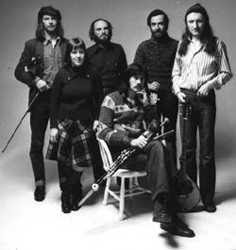
The Bothy Band

With St. Patrick's Day this weekend, I thought it would be a good time to write about traditional Irish music. In particular, I decided to look at the history of the greatest of the traditional Irish bands, The Bothy Band. The Bothy Band only produced three studio albums and one live album in their short history, but all traditional Irish music that has come since bears their influence.

A handful of developments helped to make the Bothy Band possible. First, while groups like The Clancy Brothers and The Dubliners were popularizing the Irish singing tradition in the sixties, The Chieftains began revitalizing the instrumental tradition, especially with regards to the fiddle and the uilleann pipes. Second, the band Planxty incorporated a number of Eastern European influences into their sound, most notably modal chord structures and a Greek plucked instrument called the bouzouki, when they emerged onto the scene in the early seventies. Perhaps the most important influence, though, was the growing cultural impact of rock and roll, which had begun to leave its mark on other musical styles as well. At least a few rock musicians in England were aware of Irish music; for example, The Beatles took a day off from recording Abbey Road so that The Chieftains had a place to record their second album. A couple of bands took their interest in the traditional music and folklore of the British Isles a bit further, though. Fairport Convention and Steeleye Span used fiddles and performed a lot of traditional material in a style that was always more rock than folk. These two bands have never had a huge following among rock audiences, but their repuation in folk circles remains enormous. Indeed, MĂ­cheĂ¡l Ă“ Domhnaill (guitar and vocals) cited Fairport's 1970 LP Full House, and the playing of their guitarist Richard Thompson, as major influences on the development of his style. So with a handful of bands incorporating folk music into their rock arrangements, it made sense that somebody would come up with the idea of bringing the energy and spirit of rock and roll into traditional music.

The impetus for the formation of The Bothy Band came from bouzouki player DĂ³nal Lunny, famous in traditional Irish circles as a former member of Planxty. He was already developing a reputation for wanting to work with just about everybody in the scene, and he assembled a backing band to accompany an accordionist he was working with on some radio broadcasts. This group originally included Paddy Keenan on uilleann pipes and Matt Molloy on flute. Soon Ă“ Domhnaill and his sister TrĂ­ona NĂ­ Dhomhnaill (clavinet and vocals), both from the band Skara Brae, had joined up as well, and a new band had clearly started to take shape. By late 1975, legendary fiddler Tommy Peoples had been recruited, and the sextet were ready to record their debut album.
The energy level of the playing on The Bothy Band 1975 had not been heard on any traditional Irish recording that preceded it. The band members were all masters at their particular instrument, and the notes always rang clean and true no matter how fast they were being played. Lunny and Ă“ Domhnaill provided a driving rhythm for the lead instruments to work with, and TrĂ­ona provided some balance to the band's sound with songs like "Pretty Peg." The genre of Irish traditional music had been reinvented overnight.
Unfortunately, there was no money to be made from Irish music at the time, and the long touring with little reward took it's toll. Peoples left, and Kevin Burke quickly stepped in to take his place. Peoples' reputation as a fiddler is impeccable, but I feel that Burke's style meshed better with the group. As America celebrated its 200th birthday in July 1976, The Bothy Band recorded the definitive Irish album, Old Hag You Have Killed Me. Once again the playing was superb, but the band showed real growth in its arrangements. The title tune, a three part jig, starts out simply with the melody played on clavinet, but simply soars once the second part begins. The opening tune "Music in the Glen" features a funky clavinet riff on the third parts that evokes Stevie Wonder more than anything Irish. "Sixteen Come Next Sunday" combines some exquisite guitar/bouzouki interplay underneath TrĂ­ona NĂ­ Dhomhnaill's sweet vocals. But the most noteworthy track was a short, ninety-second piece of a capella Scottish mouth music that Ă“ Domhnaill brought to the band and sang lead on. "Fionnghuala," with its frenetically alliterative, oddly harmonized chorus, sounds quite literally like nothing else, and stands as one of the genre's all-time classic recordings.
1977's Out of the Wind, Into the Sun didn't quite match the same heights as its predecessor, but remained quite solid nonetheless. The band continued to push the envelope on a couple of tracks. "The Maids of Mitchelstown" begins by alternating between two distinct melodies that fit the same chord structure, and ends with the two melodies being played simultaneously. On the second part of the set of bagpipe jigs "The Pipe in the Hob/The Hag on the Churn," NĂ­ Dhomhnaill plays a driving bass line on clavinet while Keenan crunches out the melody and Molloy and Burke produce some strident, outside-the-box harmonies. Despite the band's creativity remaining firmly intact, the money just wasn't coming in, and the band began to unravel. The following year saw the release of a live album After Hours, recorded in Paris, but The Bothy Band never returned to the studio, and played their last show in 1979.

The band members have all kept busy over the years, especially Lunny. Lunny was part of the band Moving Hearts in the eighties, and has an enormous resumĂ© of credits as a producer and guest musician. He has worked with some top Celtic acts, including Ireland's Altan and Scotland's Capercaillie, but he's helped add an Irish flavor to plenty of rock records as well. Elvis Costello's Spike, Mark Knopfler's Golden Heart, and Loreena McKennitt's The Mask and the Mirror all feature Lunny on bouzouki. His most noteworthy session work, I think, has been with Kate Bush. Songs like "Night of the Swallow" off The Dreaming, and "Jig of Life" and "Hello Earth" off Hounds of Love, are groundbreaking, genre-bending recordings that benefited enormously from Lunny's contributions. Ironically, these particular songs sold me on Irish music well before I knew who Donal Lunny was or heard of The Bothy Band. Of the remaining members, only Matt Molloy has reaped any huge commercial reward for his playing; he took up an offer to join The Chieftains in 1980, and has been playing with them ever since. Paddy Keenan relocated to Boston and tours periodically. If you'd like to see the best player at his particular instrument in an intimate setting at a local pub, Keenan is well worth checking out. Burke has played in the band Patrick Street, and has toured on his own and as part of the Celtic Fiddle Festival. MĂ­cheĂ¡l Ă“ Domhnaill and TrĂ­ona NĂ­ Domhnaill have had many projects between them, and played together in the bands Relativity and Nightnoise. Regrettably, Ă“ Domhnaill died suddenly of a fall in his house last July.

Much contemporary Irish music aims for fast playing and energetic live shows. Bands like Altan and LĂºnasa are great to see live, but haven't made albums that do their concerts justice. While I obviously never got the chance to see The Bothy Band perform live -- I've seen all of them, Tommy Peoples included, play separately -- their greatness on record keeps them at a level above all the Irish bands that have followed. It also ensures that everybody can still enjoy them today, as they were in their prime.

The Last Kiss (2006)

The Last Kiss is a modern look at the transition time from our society's prolonged adolescence to the stage of young adulthood. It stars Zach Braff, Casey Affleck, and Rachel Bilson. Braff plays Michael who seems to have his whole life in order and planned out. At 29 he's a successful architect who is climbing the career ladder at work. He has a beautiful girlfriend who is pregnant with a supportive family. The problem is that his whole life is mapped out, and he realizes that without some severe change, the next thirty years will just play out, and he doesn't like what he sees down the road. After a chance meeting with Kim, a college undergraduate played by Rachel Bilson, he gets involved in a side relationship. When his significant other is on to his game, he has a crisis of conscience and is forced to make some decisions. And making decisions, and controlling one's destiny is what being an adult is in the end.

While I was expecting The Last Kiss to be just another light and funny look into young adulthood, I found it dark and introspective. The scenes with the parents, less than happy after thirty years also were a downer along the way. The Last Kiss offers a modern commentary on long relationships in our society, and it offers more realism than entertainment. While it provokes some thought, don't expect to be wearing a smile from ear to ear after the viewing. If you want a sociological exploration into young adulthood, then The Last Kiss is for you.

Overall Grade: B-


museumofse[x]


One of the more risque additions to New York City culture is the museumofsex, an entire museum dedicated to the thrills, censorship, and history of sexuality. This is an impressive experiment in human sexuality, one that isn't perfect but is quite intriguing. The museum has three exhibitions running at a time (discussed below), along with a gift shop that has items you will most definitely not find in any other museum.


The first exhibition there is "Kink: Geography of the Erotic Imagination." This gives an overview of the more, well, kinky elements of sexuality. These include not only "popular" activities like s&m, group sex, and (as featured on the show C.S.I.) furries and infantalism, but more unusual activities: macrophiles (gigantic women), sploshing (thrills from tossing around food -- gotta love the sign "I am pisexual"), and being turned on by inflating balloons. In addition to the descriptions and visual aids, this exhibition includes several tactile props, allowing visitors to feel and try out some of the accessories for the kinks.


Next is "Action: Sex and the Moving Image." Here the museum examines the role of sexuality in cinema. While there are adult-only movies here -- from the early stag films to current porn -- the role of sexuality in mainstream movies is also looked at. You can see how sexuality is treated in "acceptable" and "unacceptable" ways, how it ruled "sexploitation" films, and how it surfaces in serious films like 9 1/2 Weeks and The Brown Bunny. And as you might expect, there are numerous video clips playing to illustrate each area being covered.


Finally the museumofsex has its continuing "Spotlight on the Permanent Collection." This is a hodgepodge of various sexual items always present at the museumofsex . You'll see some of the 19th-century anatomy books that provided the only information available at the time on human sexuality; you'll see sex toys that are technologically advanced; you'll see movie clips and kinky fashions. There's no theme to this exhibit, but it's always fun to see again!


My biggest complaint with the museumofsex is brevity. Each segment of each exhibition is summarized in a few paragraphs on the wall, there are a couple of items illustrating that, and that's it. At times this feels like an introduction rather than an exploration of the area of sexuality it's covering; and while you could spend weeks at many NYC museums and still barely scratch the surface of their contents, you can breeze through the entire museumofsex in an hour or two. Perhaps if the museum moves to a bigger space this problem will be solved.


So if you're looking for a fun, mature way to spend an hour or two in NYC, I recommend the museumofsex . (Before going, though, visit their website for a $5 coupon on the entrance fee.) As long as you're not easily shocked or offended, you'll have a blast! And you never know what fun stuff you'll find in the gift shop...


Reviewed by James Lynch

www.museumofsex.com
233 5th AveNew York, NY 10016
(212) 689-6337

3.13.2007

Hicks Spring Flower & Garden Show 2007


I've been attending the Spring Garden show for the last several years, and it is always an enjoyable experience. With the beautiful display of flowers, all wonderfully presented, it is an equal treat for the nose and the eye. Take a look at some of these images, and we can see that Spring is truly in the air. It runs until the 18th of March so you've got one more weekend to check it out.


Poseidon (2006)

Poseidon is a remake of the 1972 classic thriller, The Poseidon Adventure. I had seen the original many years ago, and the basic plot of the two films is the same. An ultra luxurious cruise ship flips over from a storm. A group of trapped passengers bands together to try to get to the bottom of the upside down ship for an egress. This time among the passengers we have Hollywood heavyweights Ricard Dreyfuss, Kurt Russell, and Josh Lucas.

This new version relies heavily on computer generated animations. The film opens with a two plus minute scene of the ship that resembles a video game, far more than film. It's always a challenge to render the ocean believably, but films like Titanic and A Perfect Storm are a lot more realistic.

The other issue with Poseidon is the characters lack depth. The disaster occurs early in the sequence, before we have developed who these folks really are. As the film progresses, the characters remain flat and unidimensional, and never really progress.


Still, I like a good thriller, and Poseidon held my attention. While it takes "poetic license" on some issues- I seriously doubt that anything electrical would function in salt water- it is a plausible story overall. If you're looking for a good yarn of the sea, can accept unidimensional characters, artificial special effects and suspect science, then Poseidon is for you. The rest can let this ship sail into the computer generated sea without them.

Overall Grade: C+

3.11.2007

300 (2007)

Time to revel in the glory of warfare -- old school! Specifically, 480 B.C. when three hundred Spartans held off the Persian army at the battle of Thermopylae. This tale of a small force against a massive one is based on Frank Miller's comic book 300, and much like his SIN CITY comic and film adaption, 300 is an over-the-top tale of tough guys and evil degenerates.

The massive Persian army is on the march, and their "god-king" Xerxes (Rodrigo Santoro) demands a tribute of "earth and water" from Sparta. King Leonidas (Gerald Butler) refuses, seeing Greece as entering an age of reason and logic, and a capitulation to a self-proclaimed god as a step backwards. But the mystics (who Leonidas sees as a throwback to supersition) refuse to let him send the Spartan army, so Leonidas circumvents this by assembling his personal bodyguard of three hundred Spartans and taking a walk -- to the narrow pass where he believes his small band of soldiers can hold off the larger army.

This movie isn't as slavishly literal to its comic book as Sin City was. The primary addition is the political struggle in Sparta where Queen Gorgo (Lena Headey) argues for the army to be sent. The main focus, though, is combat. The Spartans all wield their shield, spear, and sword to dispatch soldiers with an abundance of gore and slow motion.


300 is extraordinarily simplistic in its portrayal of good and evil. All the Spartans soldiers are heroes (even despite an opening showing that the babies deemed physically unfit are left to die), dressed and armed the same. Their adversaries are all extravagant, either through unuusal weapons (ranging from a giant to armored rhino) or degenerate lifestyle (Xerxes carried on a platform of slaves, an orgy of heavily-bejewelled women). The deformed Ephialtes (Andrew Tiernan) professes to help, but turns traitor when told he is unfit for combat. The exception is Theron (Dominic West), but he is such a loathsome character with no redeeming qualities that he exists solely for the audience to hate. And everyone who opposes Leonidas is corrupt, of course.

For all its black-and-white brushstrokes, 300 remains an exciting movie. The story moves along well, the combat is very exciting, and the film takes us to a world where bravery and sacrifice were all that soldiers desired.

Overall Grade: B+

Reviewed by Jim Lynch